Story Vines are a hands-on, visual strategy that helps students connect to and reflect on a story in a meaningful way. By moving along the rope and identifying key elements, students can clearly see important events and how they shape the retelling. This connects directly to Sometimes Reading is Hard, which explains that many students struggle not with decoding, but with organizing and understanding story structure. Visual tools like Story Vines make narrative elements concrete, allowing students to “see” the beginning, middle, and end rather than hold them abstractly in their minds. Through this activity, I saw how physically mapping a story supports comprehension, collaboration, and confidence.
Before working with the Grade 2/3 students, we had the opportunity to create our own Story Vines in class last week. Although I wasn’t able to fully complete mine as the braiding process took me longer than I anticipated, the experience was still valuable. For my vine, I chose to base it on The Animal People Choose a Leader by Richard Wagamese. I selected different shades of green yarn to reflect the forest setting, grounding the story in its natural environment.

Even without completing the addition crafted symbols I envisioned, the process pushed me to think critically about which events were essential and how visuals could support comprehension. This gave me greater confidence when guiding students, as I better understood both the creative possibilities and practical challenges.
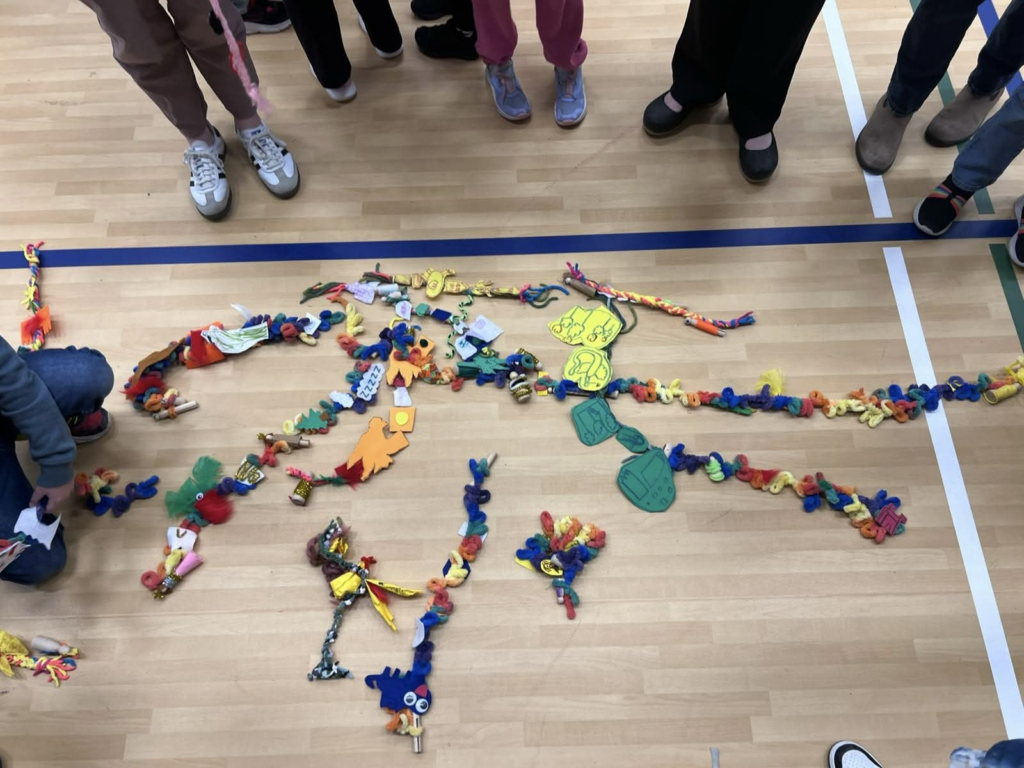
Working with the Grade 2/3 students, my group guided them in creating their own Story Vines based on Robert Munsch’s The Paper Bag Princess. After reading the book to them, we supported students through mind mapping the details they wanted to include before getting initial supplies for crafting elements such as the princess, the dragon, or the forest fires. I helped braid the vines of two students before moving into cutting out the prince’s silly red shoes or using a sparkly gold pipe cleaner as a beautiful dress for the princess. Each student created a unique vine to share with Kindergarteners.
When it came time to share with the Kindergarteners, the Grade 2/3 students required a fair amount of guidance. While their Story Vines supported sequencing, prompting was still needed to elaborate on events and explain the connections. After the presentations, we read two additional books chosen by the students before returning to The Paper Bag Princess. During this second reading, we invited students to point to corresponding sections of their vine as the story unfolded. This rereading noticeably strengthened their confidence and clarity, as they were better able to connect the physical elements to the narrative events.
Photo of all the Grade 2/3s Story Vines
This activity strongly aligns with the English Language Arts curriculum for Grades 2 and 3. Grade 2 students are expected to retell stories and sequence events, while Grade 3 students extend these skills by identifying key details and engaging in collaborative discussions. Story Vines integrate reading, speaking, listening, and representing, transforming retelling from passive recall into an interactive, multimodal experience. Overall, Story Vines provide structure for comprehension while fostering creativity and communication, something I look forward to incorporating into my future classroom.