The last topic of EAL I want to cover involves confidence and self-identity. I have found three resources to help guide my learning through this subject. The first video is a TEDx Talk by Dr. Vallerie Coleman called Finding our authentic self with the help of horses, the second resource is an article titled 9 Ways Equine Assisted Learning Can Benefit Your Confidence, Relationships & Career by Liz Haas on the recovery resources website. Finally, I have found an article from Journal of Adolescent Health by R & L Sivagurunathan titled Equine-Assisted Learning and Social–Emotional Competence in Higher Education: An Exploratory Study of Emerging Adults’ Experiences. Using my previous learning, I can see how EAL just might help in these areas, but I want to explore a more focused view into these subjects.
This TEDx Talk explores the importance of authenticity and how suppressing our true selves can affect both our mental and physical well-being. Dr. Coleman discusses how we often fall into habits of hiding our emotions or giving automatic responses like “I’m fine,” even when that isn’t how we truly feel. I like how she describes horses as “truth-tellers” because of their sensitivity to our emotions and physical states. Horses can recognize when our outward behaviour doesn’t match what we’re feeling internally, encouraging us to become more aware of ourselves and our emotions. Through equine-assisted psychotherapy, horses can help individuals recognize these inconsistencies and reconnect with their authentic selves. I think this has a really interesting connection to confidence and identity, as understanding and accepting who we are is such an important part of building confidence. It also makes me think about how often we hide parts of ourselves to meet the expectations of others, rather than feeling comfortable being who we truly are. Although this talk again focuses on equine-assisted psychotherapy rather than EAL, I think it offers some valuable insight into how horses can help us develop self-awareness and a stronger sense of identity.
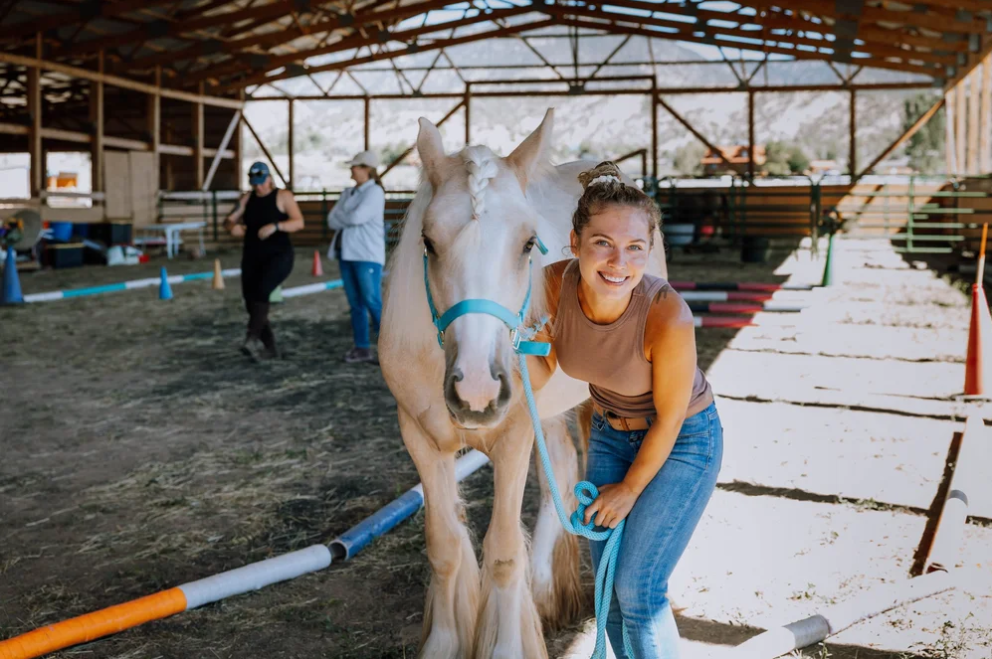
9 Ways Equine Assisted Learning Can Benefit Your Confidence, Relationships & Career looks at nine different ways EAL can help build confidence and develop skills that can be used in everyday life. Some of the main areas it focuses on include self-awareness, communication, leadership, emotional regulation, empathy, problem-solving, and interpersonal skills. I found it interesting how many of these skills can be developed through something as simple as interacting with a horse. For example, horses respond to our body language and actions, giving us immediate feedback and encouraging us to think about how we communicate and approach different situations. Participants can practice setting boundaries, making decisions, and trying different solutions in a judgement-free environment, which can help build confidence over time. I especially like the connection between developing these skills with horses and applying them to relationships outside of the arena, whether that is with family, friends, or coworkers. I think this is a great example of how EAL can support confidence and identity by helping individuals better understand themselves, recognize their strengths, and feel more capable when facing challenges. It also highlights that the benefits of EAL can extend well beyond the time spent with the horses.
Finally, Equine-Assisted Learning and Social–Emotional Competence in Higher Education: An Exploratory Study of Emerging Adults’ Experiences by Rubentheran Sivagurunathan and Linkesvaran Sivagurunathan investigates how EAL may support social-emotional development in emerging adults, an area that I think is especially relevant to confidence and identity. The study followed 15 undergraduate students between the ages of 18 and 24 who participated in an eight-week EAL program at a private university in Malaysia. Through interviews, the researchers identified three main themes: emotional learning through interactions with horses, interpersonal engagement through shared activities, and the ability to transfer what was learned into everyday life. Participants described opportunities to develop emotional awareness and regulation, empathy, patience, communication, teamwork, and trust. I found the final theme particularly interesting because it highlights how the skills developed through EAL can extend beyond the time spent with horses and influence how individuals approach their everyday relationships and challenges. I think this connects strongly to building confidence and identity, as becoming more aware of our emotions, strengths, and interactions with others can help us develop a better understanding of ourselves. It is also encouraging to see research exploring these benefits with young adults, rather than focusing only on children. Although this was a small exploratory study and more research is needed, it provides an interesting look at the potential of EAL to support social-emotional learning in higher education.
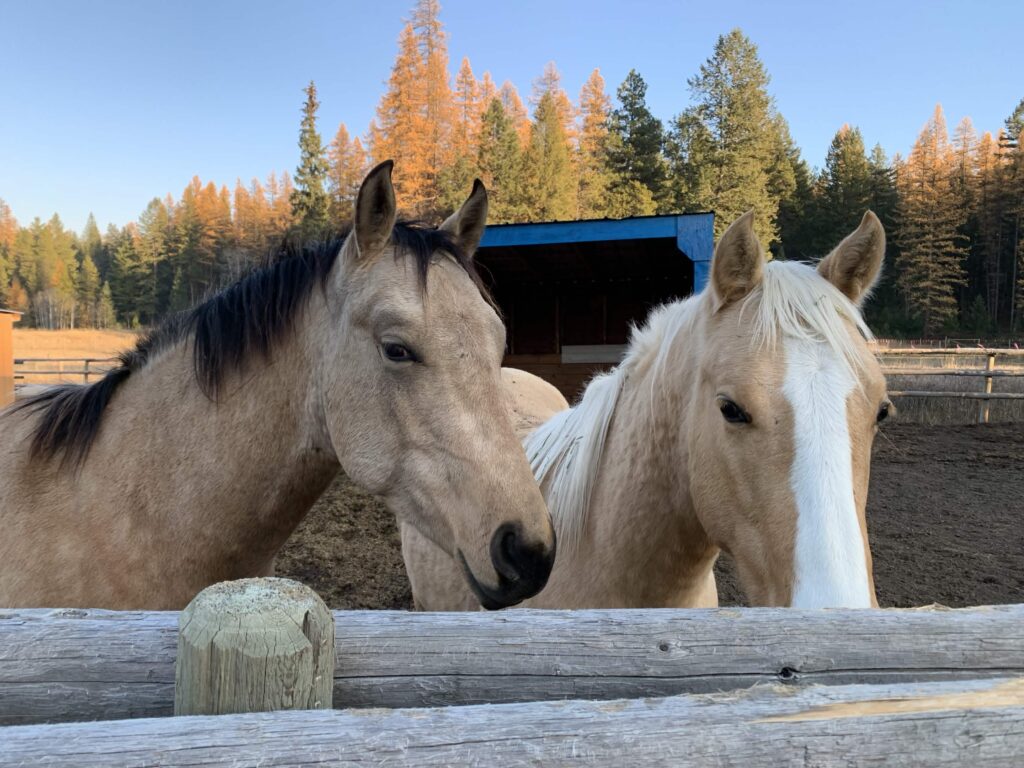
Looking at these resources has given me a better idea of how EAL can support individuals in developing confidence, self-awareness, and a stronger sense of identity. A common theme stood out to me again across these resources; how horses can encourage us to be more aware of our emotions, behaviours, and how we interact with others. Whether it is learning to communicate, setting boundaries, building trust, or recognizing our own strengths, these experiences can help individuals develop skills that carry into their everyday lives. I also found it interesting to see how these benefits apply across different age groups and settings, from children and families to young adults and the workplace. I think confidence and identity are closely connected, and having opportunities to better understand ourselves in a supportive environment can make a real difference. Overall, these resources have reinforced for me that EAL is about much more than learning to work with horses. It can also be an opportunity to work with ourselves and strengthen how we show up in the world.
Sivagurunathan, R., & Sivagurunathan, L. (2026). Equine-assisted learning and social–emotional competence in higher education: An exploratory study of emerging adults’ experiences. Journal of Adolescent Health. https://doi.org/10.1016/j.jadohealth.2026.08.010

Leave a Reply
You must be logged in to post a comment.