This week we had the opportunity to teach a “Literacy Station” with a given class of primary students. I was placed in a Kindergarten classroom, so I wanted to do a lesson that was as adaptable as possible working on letters of the alphabet, their sounds, and some words to go with them. Another peer in the same class as me did a station making letters with playdough, which I could tell the students loved, but it stuck with a similar theme of working on letters.
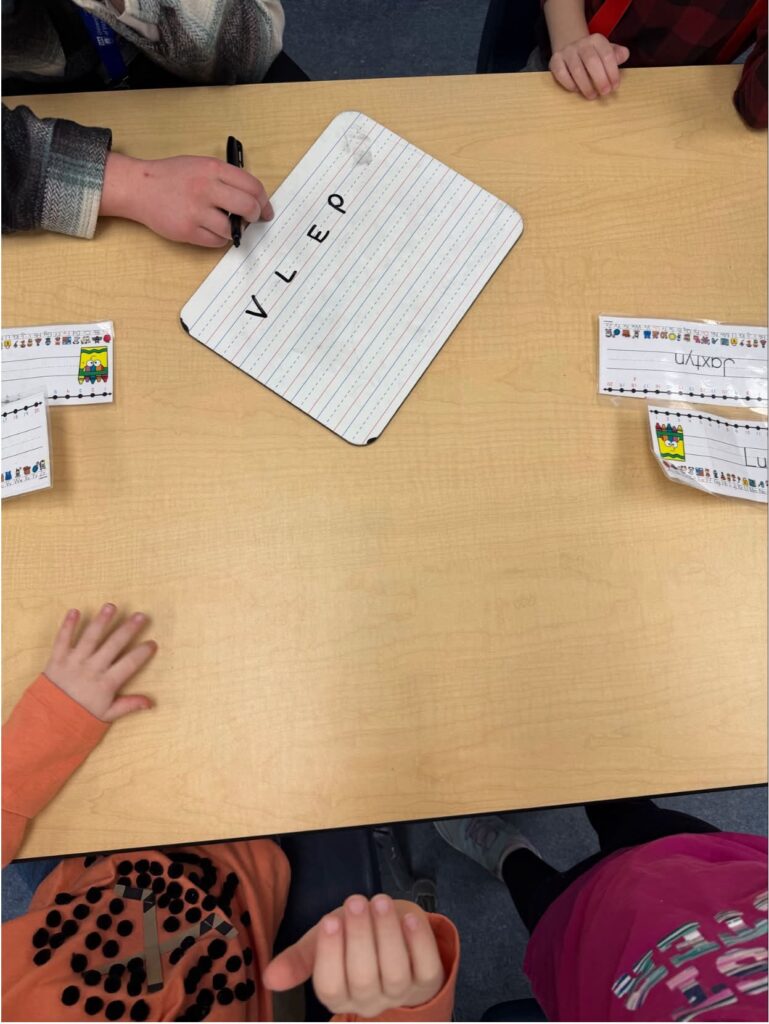
The way my station worked relied on using a mini whiteboard. We would go through rounds where I would write 4 random letters for the students to choose which letter they knew the best. The student would then tell me what sounds that letter can make and a word to go with it. The first two groups excelled in this, so I added extra depth to it where we would work on spelling the word out based on the sounds within the word. For example: I write the letters P, L, B, and I. A student chooses the letter “P” and says “P makes a ‘puh’ sound.” Then the student comes up with the word “puppy” to go with it. If able, we would go through the sounds of each letter to spell it out with as much help from me as they needed. As the student works through their turn, other student may offer help, which I gladly encouraged if the student wanted it. I believe the students working together was another valuable aspect to the lesson.
How does this activity fit the BC Kindergarten Curriculum?
This activity would include the following areas of the BC English Language Arts curriculum for Kindergarten:
Big Ideas
– Playing with language helps us discover how language works.
Curricular Competency
– Comprehend and connect (reading, listening, viewing)
– Use sources of information and prior knowledge to make meaning
– Explore foundational concepts of print, oral, and visual texts
– Create and communicate (writing, speaking, representing)
– Exchange ideas and perspectives to build shared understanding
Content
– Strategies and processes
– oral language strategies
– writing processes
– Language features, structures, and conventions
– concepts of print
– letter knowledge
– phonemic and phonological awareness
– the relationship between reading, writing, and oral language
How does this experience reflect the Professional Standards for BC Educators?
Participating in this literacy station reinforced the importance of creating a respectful, inclusive, and developmentally appropriate learning environment. Working in a Kindergarten classroom required adaptability for the large range of comprehension and abilities, so I wanted to ensure I could fit the activity to each unique student. This allowed them to engage in letter recognition and sounds at their own level. Throughout the activity, I focused on observing and responding without judgment, adjusting instruction based on student responses. Encouraging peer support helped create a collaborative learning space where students felt comfortable sharing ideas and assisting one another. This experience really highlighted the value of responsive teaching, reflective practice, and thoughtful instructional design.