For this week, we had the opportunity to read “The Wolves in the Walls” by Neil Gaiman before trying the virtual reality (VR) game about the same story. I had never tried VR before, but being a gamer on my PC, I was eager to try this different set up! It was very cool to experience as I worked through the story of the game, though there were a couple times I had to be corrected on my footing as it became so immersive. I could understand how others may have been sensitive to the experience or didn’t like it, but I definitely did. I was glad to get to experience it myself before taking this in to work with the Grade 5/6 class the next day.
The Grade 5/6 class went through a similar process to ourselves, however they were split into groups to go through areas of the school to be read to. As each group worked through the reading stations of “The Wolves in the Walls” and made it back to class, us student teachers were able to get them set up with playing the VR game. We made sure to help them fit the VR headsets and find spots with enough space in the classroom. The first student I helped was very eager to give this a try and I supervised as she worked through the story.
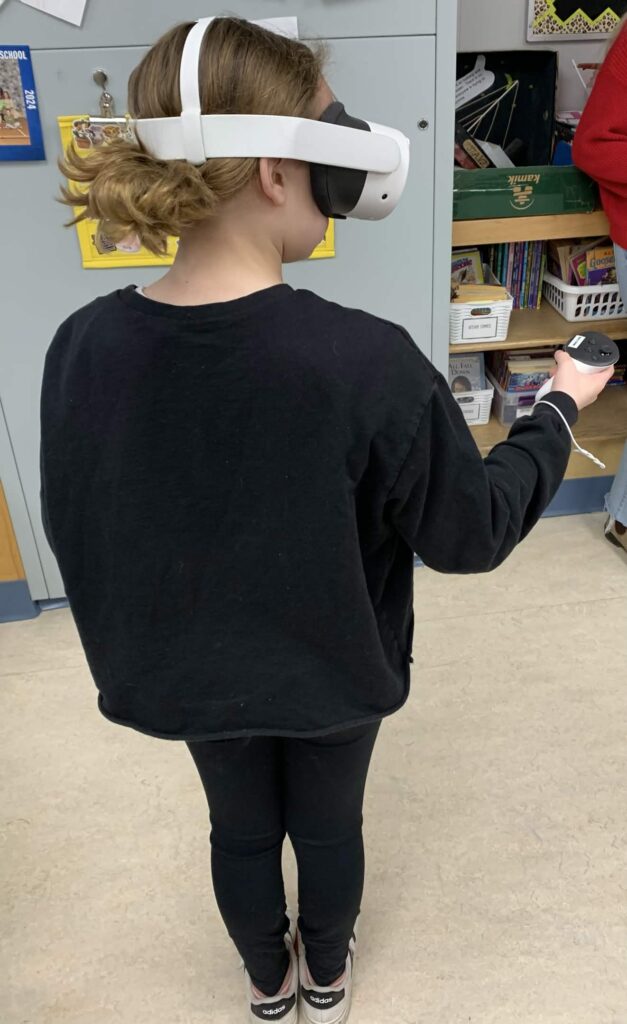
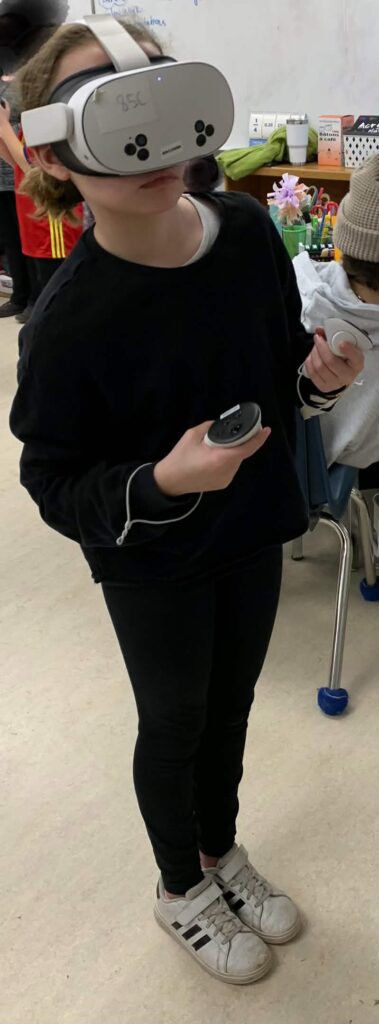
She really enjoyed the activity and once she was finished, I was able to help out another student. The second student actually owned a VR set at home so he was kind enough to allow others to try before him. He enjoyed the game as he worked through and connected it to the story, but wasn’t quite as fascinated as it wasn’t a novelty to him.
How does this activity connect to the curriculum?
This class of going through the story and then playing the VR game works well into the BC Curriculum Big Ideas for Grade 5/6 English Language Arts. The Big Ideas it connects to within Grade 5 are:
– Language and text can be a source of creativity and joy.|
– Using language in creative and playful ways helps
us understand how language works.
For Grade 6, the Big Idea connections would be:
– Language and text can be a source of creativity and joy.
– Exploring and sharing multiple perspectives extends our thinking.
The VR experience deepens these ideas by letting students enter the story world and interact with it in a fun, engaging way, rather than only observe pages of it.
Comparing a traditional picture book with an immersive VR story directly supports multimodal literacy. Through the Grade 5/6 ELA curriculums, we can connect this activity to the Curricular Competencies:
– Comprehend and connect (reading, listening, viewing)
– Use a variety of comprehension strategies before, during, and after reading, listening, or viewing to guide inquiry and deepen understanding of text
– Synthesize ideas from a variety of sources to build understanding
– Create and communicate (writing, speaking, representing)
– Use language in creative and playful ways to develop style
Finally, this activity connects with the Grade 5/6 curricular content through:
– Story/text
– forms, functions, and genres of text
– text features
– literary elements
– literary devices
– Language features, structures, and conventions
– features of oral language
– presentation techniques
Students could analyze how choice, immersion, sound, and point of view affect storytelling in VR. Storytelling through VR also blurs the line between reader, viewer, and participant within the story.
How does my participation and experience with this activity reflect on the Professional Standards for BC Educators?
Participating in this learning experience reinforced the importance of creating respectful, inclusive, and engaging learning environments that support diverse ways of learning. Experiencing both shared storytelling and an immersive digital format showed how multimodal approaches can meaningfully deepen engagement and understanding when used with intention. Throughout the activity, I thought about how instructional design and learning contexts can foster curiosity, empathy, and meaning-making. The experience also highlighted the importance of using technology thoughtfully and ethically to enhance learning rather than distract from it. Engaging as a learner strengthened my awareness of reflective practice and professional responsibility. Overall, I believe this activity supported the value of ongoing professional growth and thoughtful instructional design.